Mostly, no. In NSW, any job that connects a fitting to the water supply — or disconnects one — is plumbing work, and plumbing work must be done by a licensed plumber. That covers almost every tap swap: a new kitchen mixer, a basin tap, a shower wall set. What you can legally do yourself is genuine minor maintenance — a tap washer, a screw-on shower head, the aerator on a spout.
That surprises people. A tap change looks like a twenty-minute job with a shifter and some thread tape, and sometimes it is. But the rule was never about difficulty. It’s about what happens when a mains-pressure connection fails, and who answers for it. Here’s where the line sits if you want to replace a tap yourself in NSW — and what it costs to stay on the right side of it.
Looking for a price? See tap replacement costs in Sydney.
What counts as plumbing work in NSW
The test is short: does the job touch the water supply? Connect to it or disconnect from it and you’re doing plumbing work under NSW law, licence required. NSW Fair Trading’s guidance draws the line at genuine minor maintenance — not at how small the job looks, or how handy you are. Having done it before isn’t a licence.
A tap replacement fails that test at the first turn of the spanner. To remove a basin mixer you isolate the water, undo the flexi hoses from the wall stops, pull the old body out, then connect the new one back to the supply. The undoing and the reconnecting are both plumbing work. Same goes for kitchen mixers, laundry taps and shower sets.
Licences are checkable, whoever you hire: ask for the number and look it up with NSW Fair Trading. Ours is 498555C.
The jobs you’re allowed to do yourself
Genuine maintenance is fair game — the parts of a tap that wear out, not its connection to the water. In practice:
- Replacing a washer or jumper valve in a conventional two-handle tap
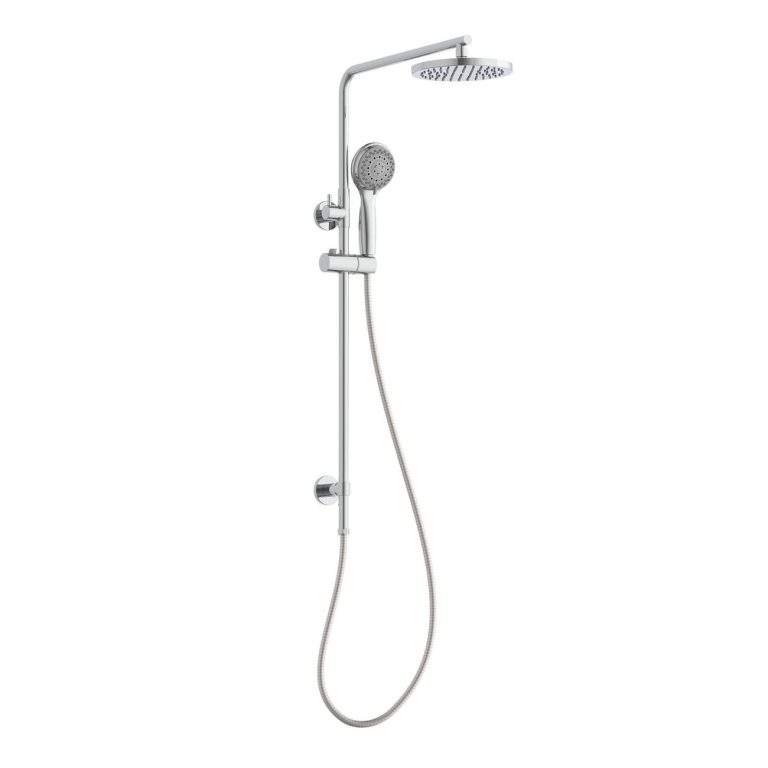
- Swapping a screw-on shower head or handpiece on the existing arm or rail
- Cleaning or replacing the aerator that screws into a mixer spout
- Changing a shower hose that threads on by hand
Notice the pattern. None of these touch the pipework: the connection to the supply stays exactly as a licensed plumber left it, and you’re only renewing the serviceable bits on your side of it. The moment a fix needs the tap body off the sink, basin or wall — or the flexi hoses undone — you’ve crossed the line.
The washer change is the one most people attempt, so here’s how to make it hold. Isolate the water — at the fixture’s own stop if it has one, otherwise at the meter — and open the tap to drain it before the spindle comes out. Before the new washer goes in, run a fingertip over the brass seat at the bottom of the body. If it feels pitted or ridged, a new washer won’t save you: the scored seat cuts into its face every time the tap closes, and the drip is back within weeks. Recut the seat first with a cheap reseating tool. Then break the habit that killed the old washer — wrenching the tap shut. A tap in good order seals at fingertip pressure; forcing it grinds washer and seat away together.
Read the leak before you pick up tools
Where the water shows up tells you which side of the line the fix sits. Diagnose before you decide:
- Drip from the spout of a two-handle tap — washer or jumper valve. Yours to fix.
- Drip from a mixer spout — the ceramic cartridge, usually grit-scored discs. We’ve covered why mixer taps drip separately; the short version is the fix sits past the maintenance list.
- Water pooling at the base of the tap — the body O-rings or the seal under the flange have gone, and the body has to come apart or off to renew them. Plumber’s job.
- Dampness in the cupboard underneath — supply side: a weeping stop or a flexi hose starting to fail. Shut the water off and get it looked at. This is the one that becomes a flood.
- Banging pipes when the tap shuts — water hammer, a pipework problem rather than a tap problem. A new tap won’t cure it.
Why a mixer swap is different from a washer
Mains pressure is the short answer. A worn washer fails politely — it drips into the sink where you can see it. A supply connection fails at full pressure, often when nobody’s home. Flexi hoses are the usual culprit, and they rarely fail because the hose was faulty; they fail because of how they went on. Cross-thread the nut and the seal is compromised from day one. Over-tighten it and you crush the sealing washer inside. Kink the hose forcing it into a tight cupboard and the stainless braid frays at the bend, the rubber liner balloons through the gap, and eventually it bursts — chemicals stored under the sink corrode the braid and hurry it along. A hose abused this way can hold for months before it lets go. When it does, mains water runs into a cupboard until someone notices. There is no polite version of that failure.
Compliance is the longer answer. Tapware that connects to the drinking water supply in Australia has to be WaterMark certified and carries a WELS water-efficiency rating, and part of a licensed install is making sure the product and fittings going onto your pipes are approved to be there. A mixer also changes how the system behaves: its cartridge shuts off with a flick of the lever, far faster than an old jumper-valve tap winds down, and on pipework that isn’t properly secured that sudden stop is what sets off the banging above.
Will your insurer cover DIY plumbing damage?
Maybe, and that’s the problem. Home policies generally expect work on the house to be done properly, and if a water-damage claim traces back to plumbing by someone without a licence, an insurer may reduce or refuse it. Not every insurer, not every policy, not every claim — a risk, not a certainty. But burst connections ruin cabinetry, flooring and the ceilings underneath them, and carrying that risk to save a $180 mixer installation fee is a poor trade. A licensed install puts a professional’s name, licence and insurance behind the connection instead of yours.
What a licensed install actually includes
More than swapping the body over. The plumber checks the isolation stops actually shut off — plenty have seized open in older Sydney homes, and a seized stop turns every future repair into a whole-house shutdown. New flexi hoses go on rather than tired old ones. The lines get flushed before connection, because the grit a disturbed pipe sheds is exactly what scores a new ceramic cartridge. Then the supply is connected and sealed, the flange bedded down so splash water can’t creep into the benchtop, and the lot tested under mains pressure — including a check for the slow weeps that don’t show themselves for a day.
The work is also warranted. TapLife backs every installation with a 12-month workmanship warranty; the tapware is covered separately by its manufacturer — Caroma, Methven, Dorf and the other brands we sell all stand behind their own product — and your Australian Consumer Law rights sit over the top of both.
The real cost of doing it properly
The DIY maths falls over here, because the saving is smaller than it looks. Installation only for a mixer you supply costs $180, plus $50 for each eligible extra mixer fitted in the same visit — no call-out fee, no hourly rate, no quote first and invoice later. The full fixed price list is on our tap installation cost page. Against that, price the DIY version honestly: new flexi hoses (never reuse the old ones), thread tape, probably a basin wrench to reach nuts you can’t see — and all of the risk above, carried by you. Buy a tap from our range and the checkout price already includes the product, delivery and installation by a licensed plumber. Fitting a 3-piece tap set you supply costs more than a mixer; the Bring Your Own tap page shows both prices.
Installs run seven days a week across our Sydney metro service area, with an arrival window of 8am to 12pm, or 12pm to 5pm (Fridays: mornings only), chosen at checkout. Book online with a $1 payment by card, Apple Pay or Google Pay. The rest is paid after installation, once the job is done — by cash or PayID, as set out on your invoice.
Change your own washers and shower heads with a clear conscience — that’s what they’re designed for. When the whole tap has to go, the legal path starts at $180 for a mixer and comes with someone accountable for the connection. If you’re at that point, look through our kitchen taps and basin taps — the Installed price on each covers the tap, delivery and fitting.